The Wire EDM Advantage
When a component is too hard to machine mechanically or requires tight tolerances and delicate geometries that are difficult to achieve with traditional machining methods, manufacturing engineers often turn to Wire EDM.
This machining process uses electrical discharge, rather than mechanical cutting, to produce complex geometries in hardened materials and intricate parts.
This article will look at what Wire EDM is, how it works, and the advantages it offers over conventional machining methods. We’ll also walk you through some Wire EDM applications in different industries and help you understand when to consider it for your projects.
What is Wire EDM?
Wire Electrical Discharge Machining (EDM), also known as wire-cut EDM or wire-cutting EDM, is a machining process in which a thin, electrically charged wire moves along a CNC-programmed path to cut and shape a metal workpiece.
Unlike conventional machining methods, Wire EDM does not use mechanical force to cut a workpiece. Instead, it uses controlled electrical discharges to erode material from the workpiece.
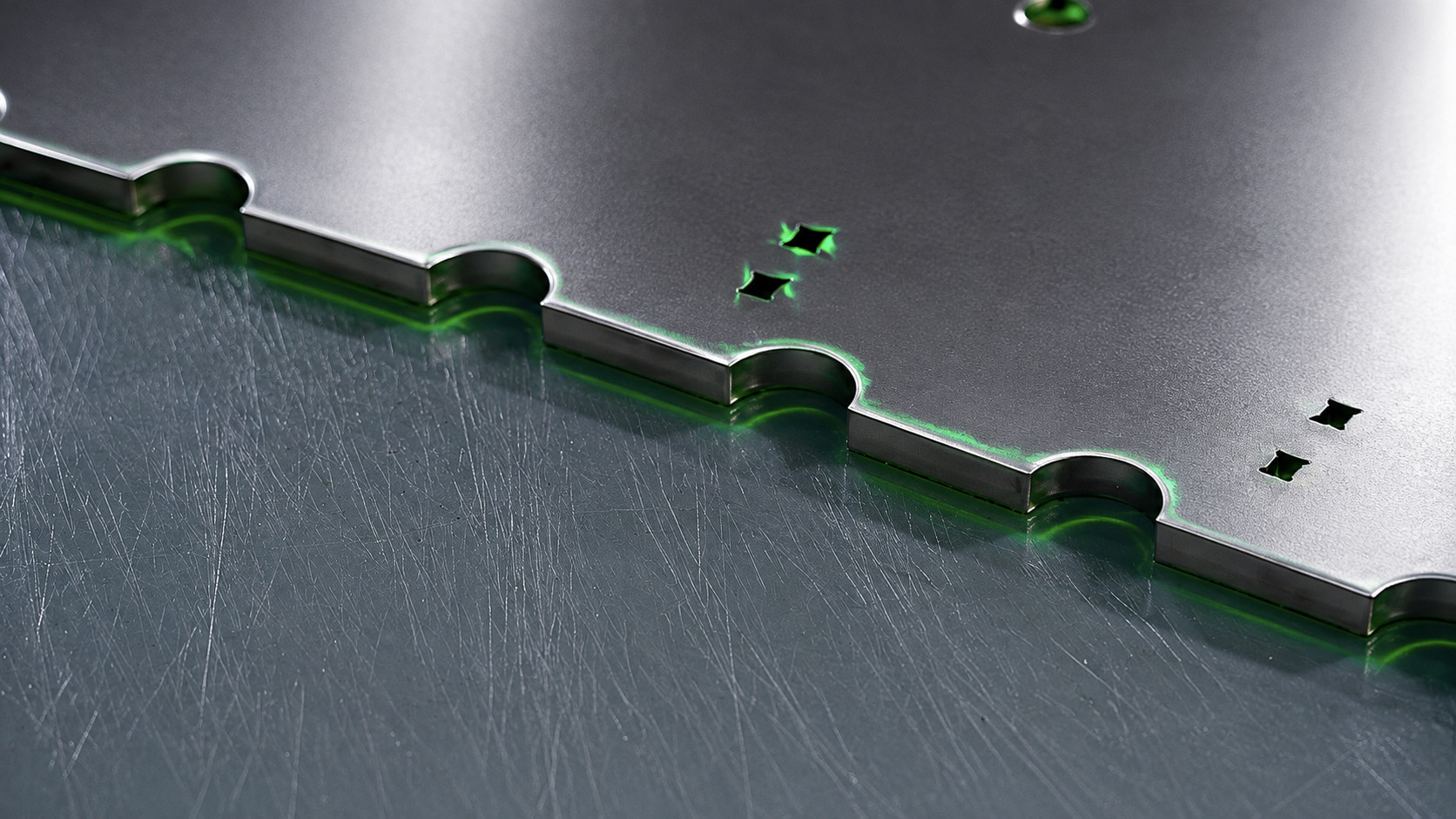
By eliminating cutting force and mechanical contact, Wire EDM prevents tool deflection and part distortion, enabling very tight tolerances and smooth surface finishes.
It is commonly used to machine extremely hard materials and create intricate shapes and features with high precision, especially when conventional cutters would deflect or cause part distortion.
Common Wire EDM applications can be found in industries such as aerospace, defense, and medical manufacturing, where tight tolerances and complex geometries are required.
How does Wire EDM work?
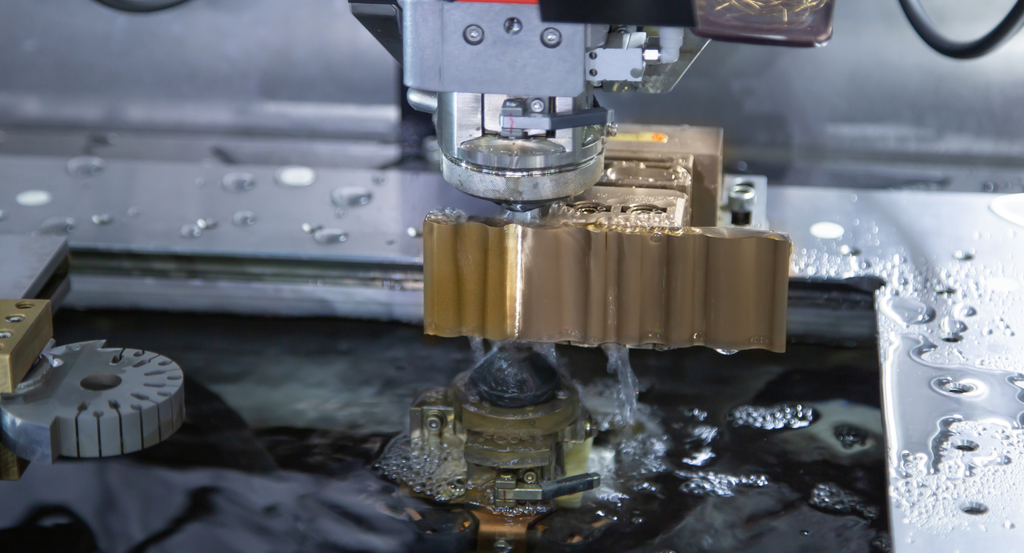
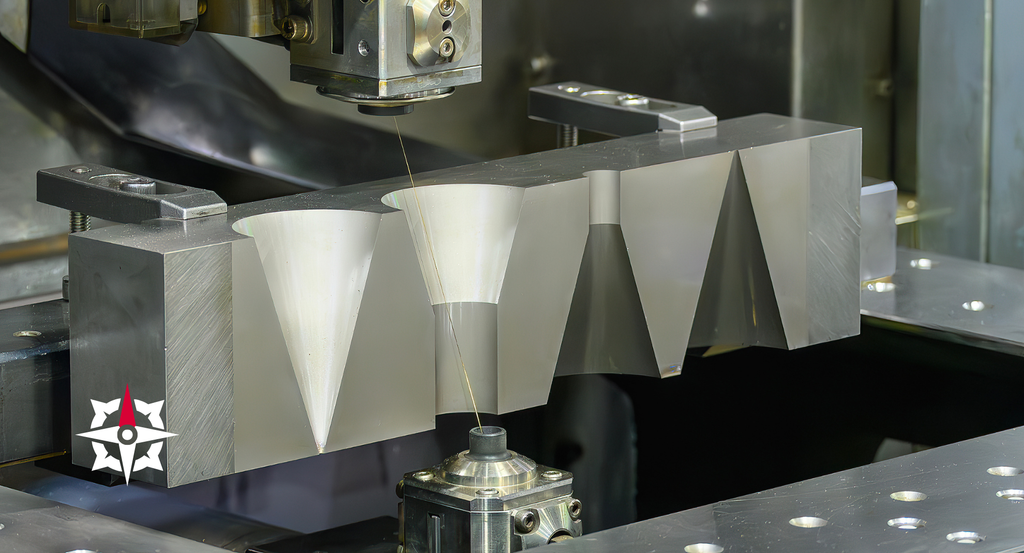
Wire EDM works by creating controlled electrical discharges between a fine wire and a workpiece. These discharges generate intense heat that progressively melts and vaporizes small amounts of material from the workpiece to achieve the desired geometry.
During this process, both the fine wire and the workpiece are submerged in dielectric fluid, usually deionized water, that acts as an insulator. The fluid also cools the workpiece and washes away the debris produced during machining.
A CNC control system moves the wire along a programmed cutting path and controls other machining parameters such as the cutting speed.
The wire does not touch the workpiece during machining. Instead, a small gap is maintained between the two, allowing electrical discharges to occur and remove material along the programmed path.
Common Wire EDM Applications
Wire EDM is widely used to machine parts and components across various industries where precision and tight tolerances are critical. Below, we’ll look at some common applications of Wire EDM in these industries.
- Aerospace
The aerospace industry often requires parts and components with tight tolerances and complex geometries that can be difficult to machine using conventional methods.
Some parts are also made from hardened stainless steel and titanium, which can cause tool deflection when machined conventionally. Wire EDM addresses these two challenges. It can machine conductive materials, regardless of their hardness.
Its non-contact machining process also eliminates tool deflection, making it well-suited for producing intricate features with tight tolerances on aerospace components such as landing gear, aircraft engines, and fuel systems.
- Automotive
Wire EDM is used in the automotive industry for the manufacturing of high-precision components, such as fuel injectors, gears, and engines, that require intricate features and tight tolerances.
Thanks to its ability to handle very hard materials, Wire EDM is also used in the production of molds and dies for the automotive industry.
- Medical devices
Medical devices and implants such as forceps, stents, and orthopedic implants require extremely tight tolerances and burr-free surfaces. Wire EDM enables these devices to be manufactured to the exact specifications needed for proper functioning.
Furthermore, it is used in manufacturing high-precision molds and dies required to produce medical components such as inhaler parts, syringes, hearing aids, and pacemakers.
- Electronics
The electronics industry also requires components with tight tolerances. Wire EDM is used to manufacture precision dies and molds essential to produce these critical electronic components.
- Mold and die
Another industry where Wire EDM is widely used is the mold and die industry. It is used to create complex geometries in molds and metal stamping dies, which are then used to produce precision parts and components for other industries.
When should you use Wire EDM?
Here are some situations when you should consider using Wire EDM over conventional machining methods.
- Hard conductive materials
Wire EDM is a solid choice for machining hard conductive materials such as stainless steel, carbide, and titanium that can be difficult to machine using conventional cutters. It’s especially useful when these materials require very tight tolerances.
- Complex geometry with tight tolerances
Wire EDM is also well-suited for machining parts and components with complex contours, small internal radii, narrow slots, and other intricate features that can be challenging to achieve with milling and turning tools.
- Small, delicate parts
The non-contact process of Wire EDM makes it suitable for machining delicate parts and components with thin walls without applying mechanical force that can cause distortion or tool deflection.
In summary, Wire EDM is generally used when conventional methods can’t achieve the accuracy, geometry, or surface finish a project requires.
Wire EDM vs Conventional Machining
Below is a side-by-side comparison of Wire EDM and conventional machining to help you decide which process is more suitable for your project.
| Feature | Wire EDM | Conventional Machining |
| Material removal | Removes material from the workpiece using controlled electrical discharges. | Removes material from the workpiece through physical contact with cutting tools |
| Material type | Can only machine electrically conductive materials. | Can machine both conductive and non-conductive materials. |
| Material hardness | It can handle conductive materials, regardless of their hardness. | Some materials are impractical to cut using conventional machining methods. |
| Tolerances | Capable of machining parts with extremely tight tolerances. | Cutting pressure can push parts out of tolerance, making it difficult to achieve extremely tight tolerances. |
| Complex geometries | Capable of machining intricate profiles, small internal radii, narrow slots, and other complex features with precision. | Complex geometries may require specialized tooling and multiple operations. |
| Tool deflection | Non-contact machining eliminates tool deflection. | Tool deflection can occur, particularly with long, slender tools. |
| Small, delicate parts | Suitable for small, delicate parts and components with very thin walls. | Cutting force may cause distortion in small, delicate parts. |
Limitations of Wire EDM
Although Wire EDM offers several benefits, it also has some limitations that you should know.
- Material limitation: Wire EDM can only be used on electrically conductive materials. It can’t be used to machine non-conductive materials like plastic and ceramics.
- Slower cycle times: Wire EDM removes material in very tiny bits using electrical discharges, so it’s generally slower than some standard machining methods.
Let’s Discuss your Machining Requirements
Planning a high-precision project and unsure which machining method to use for your parts? Contact Compass Precision to discuss your project requirements today. Our highly experienced engineers will review your requirements and help you determine if Wire EDM is a good fit for your project.
Why choose Compass Precision?
- High EDM capacity
We’ve dedicated EDM capacity across multiple facilities in North Carolina and Michigan and can handle EDM jobs at a scale most single-site suppliers cannot offer. Our EDM capability includes Wire EDM, Sinker EDM, and EDM hole drilling.
- Quality across facilities
We maintain standardized quality, documentation, and inspection across our network, with certifications applied at the facility level based on program requirements. Our certifications include AS9100D, ISO 9001:2015, ITAR, CMMC, and AWS where applicable.
- Programs matched to the right manufacturing partner
We match each project with the shop best positioned to deliver on its requirements, based on process expertise, certifications, capacity, and application fit. You engage through a single point of contact while benefiting from access to the most appropriate manufacturing capability within the network.
- Trusted, Experienced Service Provider
We have an established track record of executing programs that require precision components. Whether you need EDM machining, Swiss Machining or CNC turning, you can trust Compass Precision for high-quality, consistent results.
Frequently Asked Questions
- What is Wire EDM?
Wire EDM is a machining process that uses electrical discharges to remove material from a conductive workpiece. Unlike conventional machining methods, it does not apply cutting force. Instead, the electrical discharges generate heat that melts and vaporizes small amounts of material from the workpiece.
- What type of material can be machined with Wire EDM?
Wire EDM can work on electrically conductive materials such as titanium, tool steel, stainless steel, aluminum, alloy steels, and superalloys.
- What materials cannot be machined with Wire EDM?
Wire EDM cannot machine non-conductive materials such as plastics, glass, wood, and ceramics. It can only work on electrically conductive materials.
- What are the advantages of Wire EDM?
The main advantage of Wire EDM is that it can deliver tight tolerances on difficult-to-work-on materials and produce clean, repeatable intricate features that are difficult to achieve with conventional cutters.
- What are the common applications of Wire EDM?
Wire EDM is widely used in the automotive, electronics, medical, and aerospace industries. Common applications include creating intricate features in aircraft components, automotive components, medical devices, medical implants, molds, and dies.